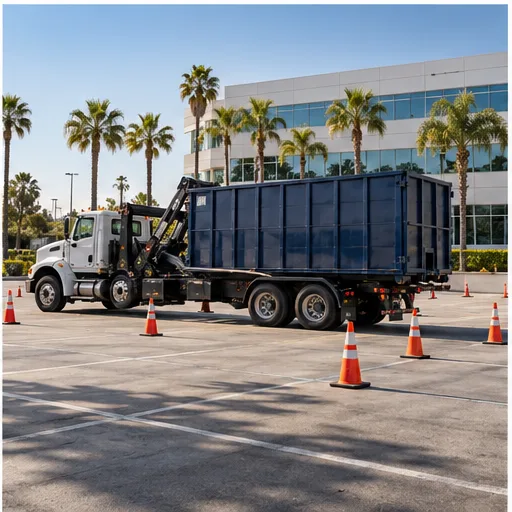
Commercial properties often involve several decision-makers. Confirm who can approve the exact placement before a driver arrives. A tenant’s preferred spot may conflict with property management, fire access, loading rules, or another business.
Identify the decision-maker
Name the property contact, project contact, and on-site person available during delivery. Share gate codes and access instructions through the provider’s approved channel, not on an unsecured public note.
Measure the complete route
| Check | Look for |
|---|---|
| Width | Gates, bollards, parked vehicles, loading docks |
| Height | Canopies, garage openings, pipes, wires, branches |
| Turning | Dead ends, tight corners, delivery traffic |
| Surface | Slopes, drains, pavers, underground structures |
Protect normal operations
Keep fire lanes, accessible routes, exits, customer paths, and neighboring loading areas clear. Schedule loading work and pickup around property rules and busy periods. Use barriers or supervision where authorized and appropriate.
The site-contact handoff
- Exact address and entry gate
- Approved placement point
- Access window and site hours
- Debris type and loading team
- Property restrictions
- Who answers the phone during delivery
- Who requests pickup
Review commercial dumpster rental planning before scheduling.